 ClearInnovation
Texas heat and UV rays damage windows by breaking down sealant materials, fading window film coatings, warping frames, fogging double-pane glass, and reducing insulating performance over time. The result is higher cooling bills, faded interior furnishings, and windows that no longer block heat like they used to. Replacement or upgrades fix it.
Texas sun is no joke. Anyone who has lived through a Central Texas summer, especially in places like Austin, Leander, or Cedar Park, knows the heat well, but the part most homeowners forget about is what that constant sun and heat are doing to their windows. Window glass and frames take the brunt of the climate every single day, and the damage builds slowly enough that you don’t really notice until your windows stop working the way they should.
The combination of Texas heat and UV damage windows undergo over the years can lead to higher energy bills, faded furniture, warped frames, foggy glass, and seals that just give up. None of it happens overnight, which is exactly why it’s easy to ignore until the bill comes due. That’s where professional Window Installation / Fenestration in Austin becomes important for improving efficiency and long-term performance.
We see it every day on jobs across Central Texas, including Austin, Leander, and Cedar Park. Homes that look fine on the outside have windows that lost their efficiency years ago. The owners just got used to higher AC bills and faded curtains. Here’s what’s actually going on, why it matters, and what you can actually do about it.
Texas gets a lot of sun. More than most of the country. Combined with summer temperatures regularly above 95 degrees and direct UV exposure for hours every day, that adds up to one of the harshest window environments in the United States. Even high-quality windows installed properly will degrade faster in Texas than in cooler, less sunny climates.
Three forces are at work here. Heat itself causes thermal expansion and contraction in the frames and glass. UV rays break down the chemistry of seals, coatings, and surrounding materials. And humidity in coastal areas adds moisture that finds its way into compromised seals and accelerates damage from the inside.
Modern windows are more complex than people realize. A standard double-pane window has two layers of glass, a sealed gas-filled space between them, and often a low-emissivity (Low-E) coating that reflects heat. UV rays and heat attack each of these components in different ways.
The Low-E coating slowly degrades over the years of direct sun exposure.
It still works, but its efficiency drops. The glass itself is mostly UV-resistant, but stress fractures can develop in the corners where heat causes uneven expansion. Tempered glass holds up better than annealed glass under thermal stress, but neither lasts forever.
The biggest problem is the seal between the panes. When that seal fails, the inert gas escapes, moisture enters, and the window starts to fog up. Once you see condensation between the panes, the window has lost most of its insulating value. There’s no real fix at that point. The glass unit needs to be replaced.
Frame damage depends on the material:
Vinyl frames are popular because they don’t rot and don’t need painting, but they soften and warp under extreme heat. UV rays also fade and discolor vinyl over the years of exposure. Cheap vinyl warps faster than premium grades, and warped vinyl pulls the window out of square, causing operational problems and air leaks.
Aluminum frames conduct heat very efficiently, which is the opposite of what you want in a Texas window. They make the window feel hot to the touch on summer afternoons and create thermal bridging that bypasses the insulating glass. They don’t warp like vinyl, but they’re a bad choice for Texas climates unless they’re thermally broken.
Wood frames look great and insulate well, but they need maintenance. UV rays break down paint and wood finishes, and once moisture gets into bare wood, it starts rotting. Wood frames in Texas need regular painting and sealing to stay in good shape.
Fiberglass and composite frames hold up best in Texas heat. They don’t warp, conduct very little heat, resist UV degradation, and stay dimensionally stable across temperature swings. They cost more upfront, but they’re often the smartest long-term choice for Texas homes.
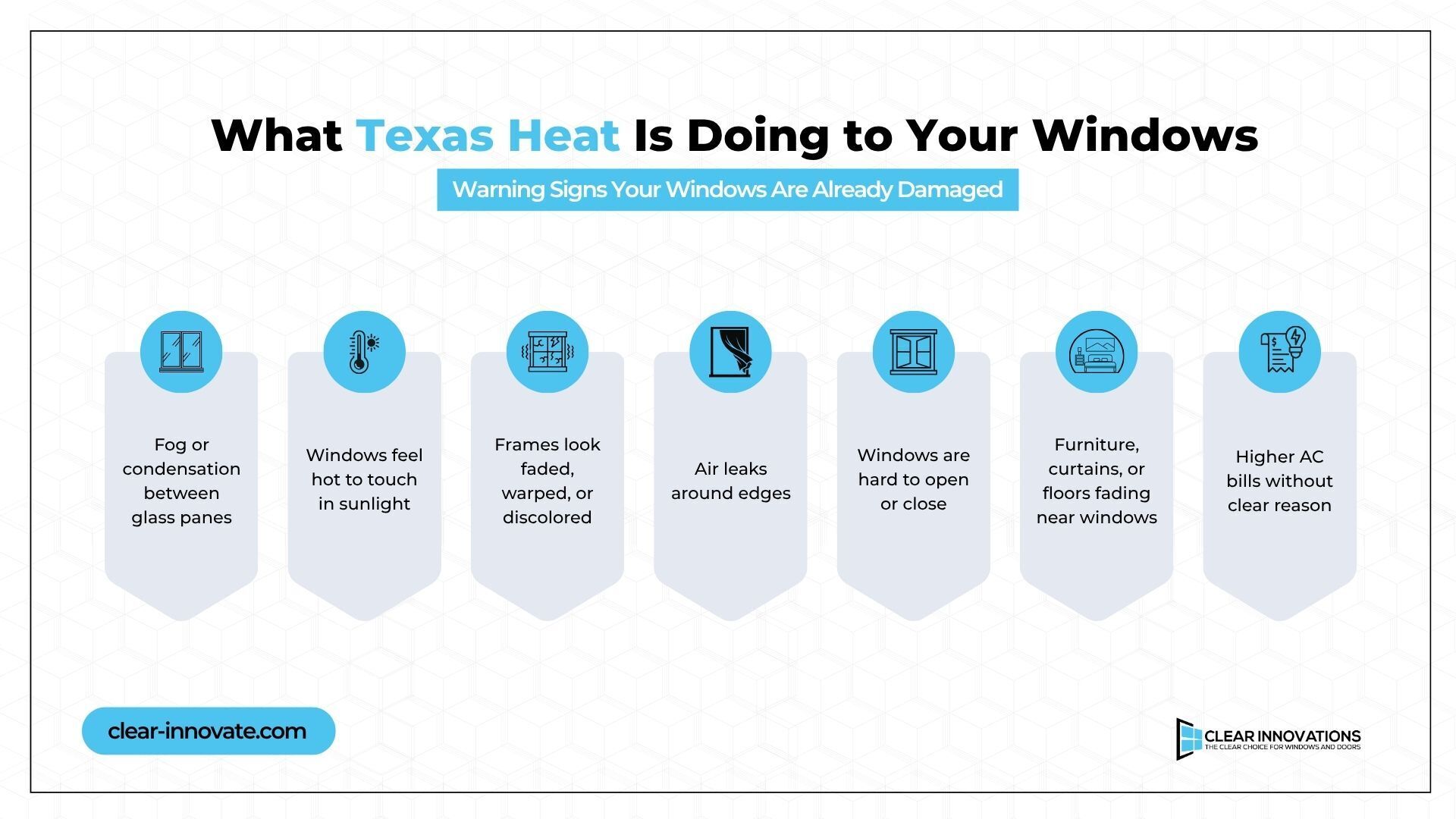
Most window damage is gradual and easy to miss. Look for these signs the next time you’re walking through your home:
Any one of these is worth investigating. Two or more usually means the windows are well past their best.
The biggest practical consequence of damaged windows is what they do to your cooling costs. A modern energy-efficient window with intact seals and a working Low-E coating blocks a huge amount of heat from entering the home. A damaged or older window doesn’t. The AC has to run harder to compensate, which means longer run times, higher electricity bills, and faster wear on the unit.
We’ve seen homeowners cut their summer cooling bills by 20 to 30 percent just by replacing the worst windows in the house. That’s not a guarantee, but it’s a real outcome we see often when older or sun-damaged windows get upgraded properly.
UV rays don’t just affect the windows themselves. They pour through the glass into your home and slowly destroy everything they touch. Hardwood floors fade and discolor. Upholstered furniture loses color. Curtains and rugs near sunny windows show a wear pattern that matches the sun’s path through the room. Art and photos near windows fade and degrade.
Modern Low-E coatings block a significant percentage of UV rays. Older windows or windows with degraded coatings let much more through. If you’ve noticed fading inside your home that follows the sun, your windows are probably part of the problem.
There are a few real options, ranked from cheapest to best:
Add window film: Aftermarket UV-blocking film is the cheapest fix. It’s adhesive-backed, applied to the inside of the existing glass, and blocks a high percentage of UV rays and some heat. It’s a good short-term solution for windows that aren’t ready for full replacement. Quality film lasts 5 to 10 years.
Add or upgrade window treatments: Cellular shades, solar shades, and exterior awnings reduce heat gain significantly. They don’t fix the underlying window problem, but they help.
Repair seals where possible: A good window company can sometimes re-seal frames and replace weatherstripping to extend the life of an existing window by a few years. This works best on windows that aren’t otherwise damaged.
Replace the glass unit: If the frames are still in good shape but the glass has fogged or lost efficiency, just the insulated glass unit can sometimes be replaced. Cheaper than a full window replacement.
Replace the whole window: The most expensive option, but the most complete fix. New windows with modern coatings, gas fills, and durable frames can last 20 to 30 years and dramatically improve energy efficiency. For homes with lots of sun-damaged windows, this often pays back faster than people expect through energy savings.
Some windows can be patched, some need to be replaced. Here’s how to think about it:
Patches make sense for short-term ownership or budget-limited situations. For homeowners planning to stay, full replacement is usually the better long-term move.
If you decide to replace, focus on a few key features:
Cheap windows installed badly will fail just as fast as the ones you’re replacing. The quality of the install matters as much as the quality of the window itself.
Texas sun and heat are slowly aging your windows, whether you’re paying attention or not. The damage is gradual, but the effects on your comfort, your energy bills, and your home’s overall feel add up over the years. Knowing what to look for and acting before things get bad saves money and keeps your home comfortable through the worst of the summer. Whether you start with a film, repair a few seals, or commit to a full replacement, doing something is better than letting the damage keep building.
When you’re ready to talk about your options, we’re happy to come take a look at your windows, walk through the condition of each one, and help you figure out what makes sense for your home and budget. At Clear Innovations, we work with Texas homeowners every day, and we’ll always tell you what your windows actually need versus what they don’t. Give us a call when you’re ready, and we’ll take it from there.
Most quality vinyl windows in Texas last 15 to 25 years before showing significant heat or UV damage. Premium fiberglass and composite windows can last 25 to 40 years. Older aluminum windows often need replacement sooner because of poor insulating performance and thermal expansion damage to the frames.
Yes. Quality window film blocks 99 percent of UV rays in many cases, plus a meaningful percentage of heat. It’s a good low-cost option for protecting furniture and flooring from sun damage and reducing heat gain. The film typically lasts 5 to 10 years before it needs replacement.
Hot windows usually mean the glass is absorbing heat that should be reflected. This happens when Low-E coatings have degraded, the gas fill between panes has leaked out, or the window was a single-pane or low-quality double-pane to begin with. Newer windows with current coatings stay much cooler.
It varies, but homeowners often see cooling cost reductions of 15 to 30 percent after replacing older or damaged windows with modern energy-efficient ones. Savings depend on how bad the original windows were, how much sun the home gets, and how the AC system was sized for the previous conditions.
The fog is caused by failed seals between the glass panes. The seal can’t be repaired, but in many cases, just the insulated glass unit can be replaced while keeping the existing frame. That costs less than a full window replacement. If the frame is also damaged, full replacement is usually better.
Let us help you bring your vision to life with our unparalleled expertise and dedication. Contact Clear Innovations today to explore our range of glass windows and doors designed to elevate your space.

 Call Us Today:+1 512-337-7272