 ClearInnovation
A new door can change how a home feels the moment someone walks up to it. It adds security, improves curb appeal, and helps keep indoor temperatures comfortable through hot Texas summers and chilly winter nights. But here’s the catch: even a high-quality door can perform poorly if the door installation is done wrong.
Many homeowners focus on the style or material of a door and overlook the installation process. A door might look great on day one, yet small mistakes behind the frame can lead to air leaks, sticking doors, water damage, or security issues later.
That’s why careful installation matters just as much as the door itself. Whether it’s a front entry door, patio door, or interior door, understanding common installation mistakes can help prevent problems and protect your investment.
Let’s walk through the most frequent issues seen during door installation across Texas homes and what can be done to avoid them.
One of the most common problems starts before the installation even begins. If measurements are even slightly off, the door may never sit correctly within the frame.
Door openings in many Texas homes are not perfectly square, especially in older properties where foundations may shift over time. Installing a door based only on rough measurements can leave gaps or force the installer to adjust the frame in ways that weaken the structure.
A proper measurement process usually includes:
When measurements are precise, the door fits the way it should, which reduces the chances of drafts or alignment issues later.
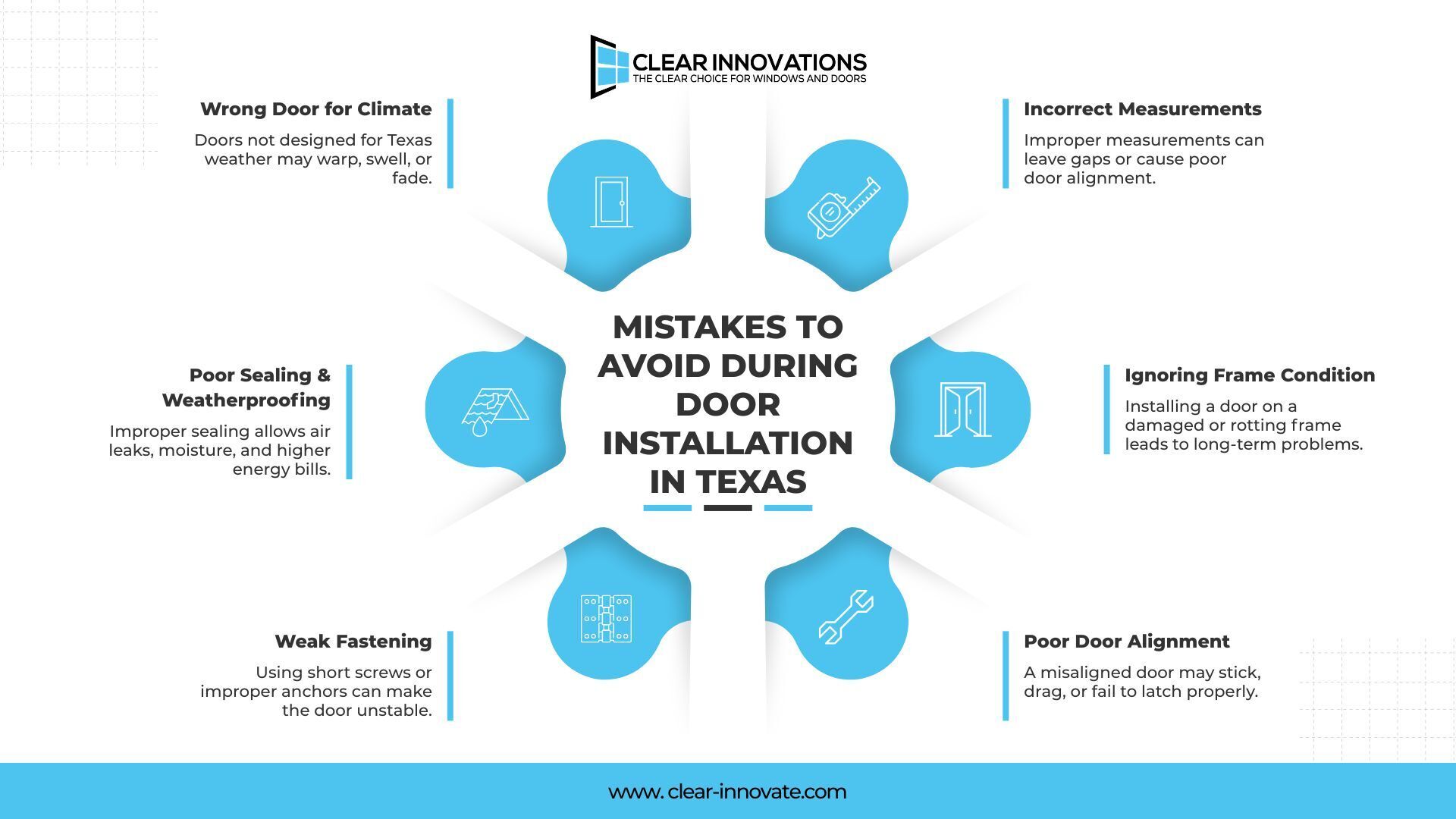
A new door installed into a damaged frame is like putting new tires on a bent wheel. It might work temporarily, but problems show up sooner or later.
Frames can suffer from moisture exposure, termite damage, or general wear. In parts of Texas where humidity and storms are common, wood frames may swell, crack, or rot over time.
If the frame isn’t inspected carefully before installation, the new door may:
A careful installer checks the frame first and repairs or replaces it when needed before fitting the new door.
Even when measurements are correct, a door can still fail if it’s not aligned properly during installation.
Alignment affects how the door opens and closes. If the door isn’t level and square inside the frame, it may drag across the floor, leave gaps along the edges, or refuse to latch smoothly.
Some signs of poor alignment include:
These issues often happen when installers rush the job or skip small adjustments. Shimming and leveling the frame carefully prevent these problems.
Doors rely on strong anchoring to stay stable over time. Using the wrong screws or placing them incorrectly can cause the frame to shift.
Exterior doors especially need secure fastening because they handle daily use, weather exposure, and sometimes strong winds during storms.
Common fastening mistakes include:
Proper installation connects the door frame firmly to the surrounding wall structure, helping it stay stable for years.
Texas weather can change quickly. One week might bring heavy rain, while the next week brings intense heat. If a door isn’t sealed properly, outside air and moisture can slip through small openings.
Weatherproofing usually includes:
When sealing is done correctly, the door helps maintain indoor comfort and prevents energy loss. Poor sealing, on the other hand, can raise energy bills and lead to water damage inside walls.
Not every door type works well in every region. In Texas, doors must handle heat, humidity, and sudden temperature swings.
Choosing a door without considering local conditions can lead to warping, swelling, or fading over time.
For example:
Homeowners often benefit from doors designed for energy performance and durability in warm climates.
The threshold sits at the bottom of the door and plays a bigger role than many people realize.
It keeps water from entering the home and forms a tight seal when the door closes. If the threshold isn’t installed at the right height or angle, it may allow water to seep inside during storms.
Mistakes with thresholds often include:
When done properly, the threshold creates a smooth transition between indoor and outdoor flooring while keeping the interior dry.
This might sound simple, but door swing direction can become a headache if it isn’t planned.
Some installations fail to consider:
A door that opens the wrong way can block walkways or make a room feel cramped. Thinking through how the door will move within the space helps avoid this issue.
Even if the door and frame are installed correctly, poor hardware can ruin the experience.
Handles, locks, hinges, and strike plates should be chosen carefully and installed with precision. Loose or low-quality hardware often leads to rattling doors or weak security.
Hardware installation mistakes often involve:
Taking a little extra time with hardware ensures the door operates quietly and securely.
Finishing touches may seem minor, yet they protect the door from long-term damage.
Exterior doors especially require proper finishing to resist sun exposure, rain, and humidity.
Some finishing steps include:
When installers rush this stage, moisture can reach the door core and cause swelling or deterioration.
Many homeowners enjoy tackling home improvement projects themselves. Installing a door may look straightforward, but the process involves several technical steps.
A single mistake can create ongoing problems such as air leaks, sticking doors, or security concerns.
DIY installation often runs into trouble when:
For large exterior doors or custom entry systems, professional installation often saves time and prevents costly repairs later.
Texas homes face unique environmental conditions. High summer temperatures, sudden storms, and shifting soil can all affect door performance.
A properly installed door helps with:
When the installation process is done carefully, homeowners enjoy smooth operation and peace of mind.
For property owners considering a new entry door or replacement project, working with experienced installers can make the difference between a door that lasts a few years and one that serves the home for decades.
Companies such as Clear Innovations often help homeowners address installation challenges while ensuring doors are fitted correctly for Texas conditions.
A door may seem like a simple part of a house, yet its installation requires careful attention to detail. Small oversights during the process can turn into long-term frustrations, from air leaks to doors that never close properly.
Taking time to measure accurately, prepare the frame, seal the opening, and install hardware correctly prevents most of the problems homeowners face after installation.
If you are planning a door replacement or a new installation project, slowing down and focusing on these details will help ensure the door performs the way it should for years to come.
And when the job feels beyond a typical DIY project, experienced service providers like Clear Innovations can help ensure the door fits properly and stands up to Texas weather.
Incorrect measurements are one of the most frequent problems. Even small measurement errors can cause alignment issues and leave gaps around the door.
A standard door replacement often takes a few hours, while custom doors or structural adjustments may require more time.
Yes. Gaps around the frame allow outdoor air to enter the home, which forces heating and cooling systems to work harder.
Not always. If the frame is still in good condition and properly aligned, it may remain in place. Damaged frames usually need replacement.
Fiberglass and insulated steel doors are often chosen because they resist warping and help maintain indoor temperatures.
Common warning signs include drafts, difficulty locking the door, visible gaps, or a door that sticks when opening or closing.
Let us help you bring your vision to life with our unparalleled expertise and dedication. Contact Clear Innovations today to explore our range of glass windows and doors designed to elevate your space.

 Call Us Today:+1 512-337-7272